
01 · Faras, Nubia (northern Sudan) · 8th–12th century
Faras Nubian Murals
For four centuries the Christian kingdoms of Nubia covered the walls of their cathedrals with painted saints, bishops, and royal patrons. When the Nile was dammed in the 1960s, an international rescue dig lifted the murals of Faras Cathedral off the walls before the water rose. What came out was a complete painting tradition nobody in Europe had catalogued: dark-skinned haloed figures in white robes, frontal and calm, painted in earth pigments on lime plaster. It is Nubian art about Nubian people, made long before anyone needed to argue for that.
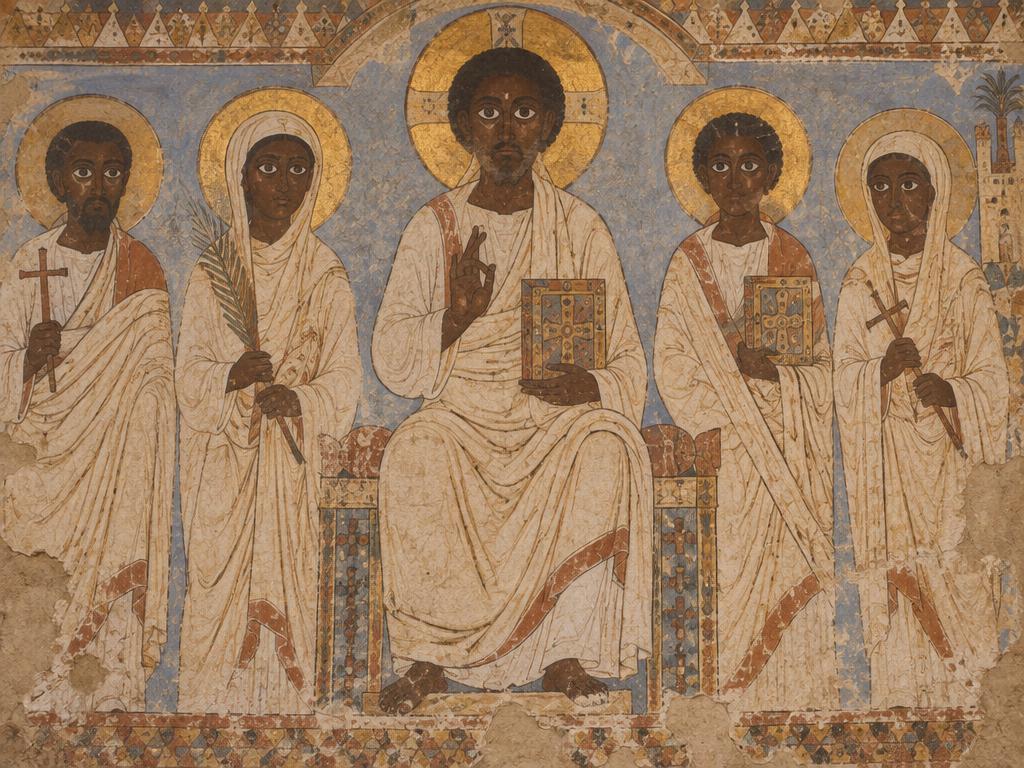
The Faras wall painters
anonymous, 8th–12th c.
The Faras murals were made by workshops rather than signed individuals, and their discipline shows: a shared vocabulary of frontal poses, almond eyes set wide, gold and ochre halos, and drapery drawn as nested outlined folds rather than modelled cloth. Bishops and queens were painted at the scale of their standing, with names written beside them in Old Nubian and Greek. The painters worked directly on lime plaster with earth pigments, which is why the surviving surfaces have that chalky, sun-faded softness.
Look for
- frontal, unmoving poses
- gold or ochre halos
- wide almond eyes
- drapery drawn as nested outlines
- chalky, sun-faded plaster surface
You've walked the cycle for 01.
Now take that language into the lab: pick your layers, roll the dials, and pull prompts in this style — always carrying Diaspora imagery.